Silvia: Welcome, Dr Merl! Thank you very much for taking the time to speak with us. To begin, would you like to introduce yourself and tell us a little about your professional background?
Dr Merl: My name is Dr Fritz Merl. After completing my secondary education, I met the father of my girlfriend at the time; he was a practising veterinarian in the Oberhessen region, who took me along with him on visits to farms. I was so fascinated by the work that I decided to study veterinary medicine. Afterwards, I worked in a veterinary practice specialising in large animals, and later took over the practice and ran it independently.
The work was demanding in terms of both time and health. I had to be available almost 24/7, and especially at night, when I would have to go out in all kinds of weather, whether ice or snow, to then change clothes and help deliver a calf. It was a wonderful experience, but also very exhausting. Eventually, I decided to move into public service.
After completing the district veterinary examination, which involved three months of preparation followed by the required assessments, I initially worked as an official veterinarian in Pirmasens. I then returned to Hesse, where I worked in Frankfurt and Gießen. Eventually, I became Head of the Veterinary Office of the City of Frankfurt, a position I held for 20 years until my retirement.
Silvia: What responsibilities shaped your work as Head of the Veterinary Office, and which challenges have stayed with you in particular?
Dr Merl: The main responsibilities of the Veterinary Office, and especially those of its Head, were food safety and inspection, animal welfare, and the control of animal diseases. My role was to coordinate the work and set priorities. I found this work very rewarding because it gave me the opportunity to make a difference, at least in the field of animal welfare. For example, I discovered that an animal shelter lacked a quarantine facility and that newly admitted animals, which might have been carrying infectious diseases, were being housed together with the other animals. Something urgently needed to change.
Silvia: What experiences have you had with animal welfare during animal transport? Are there any particular successes that stand out in your memory?
Dr Merl: There is a great deal to say about animal welfare and animal transport. One incident, in particular, comes to mind. The police called me to report a pig transport at a parking area near Frankfurt. Together with a veterinary student who was completing an internship with me at the time, I inspected the vehicle and discovered that the drinking nipples were missing from the upper deck and that the animals were lying in their own faeces. I ordered the truck to be taken to a control post, where the pigs could recover and receive treatment. They were allowed to continue their journey only once their care had been ensured.
I also inspected animals arriving at Frankfurt Airport, including birds and zoo animals. On one occasion, cranes had arrived in Frankfurt by plane and were due to be transferred to another vehicle and continue their journey to their final destination. I prohibited this and ordered that the animals first be housed in the airport's animal holding facilities for at least 48 hours, so that they could recover — a decision that did not go down particularly well with the transport operators.
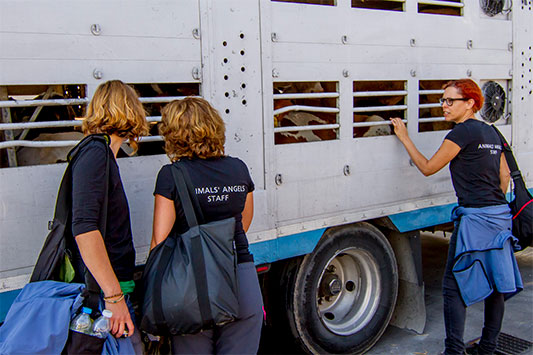
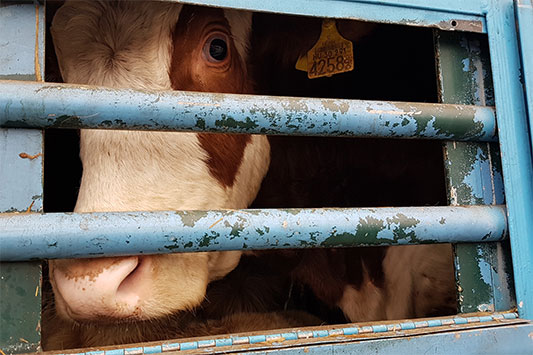
More broadly, the poor conditions animals endure during transport are extremely distressing. This is why I greatly value the work of Animals' Angels. The organisation documents abuses during animal transport, draws attention to violations and works to ensure that these are brought to the attention of the relevant authorities, particularly at EU level. Enforcing existing regulations remains a major challenge. To improve this, Animals' Angels trains police officers so that they can assess animal transports more effectively.

Silvia: What are your hopes for the next generation of veterinarians?
Dr Merl: Above all, I would like to see greater sensitivity towards animal welfare among future veterinarians. Treating animals medically is one thing, but I would very much like to see the new generations giving greater consideration to animal welfare and incorporating a stronger awareness of animals' needs into their work.
Since 2009, I have been volunteering to provide veterinary care for the animals of homeless and financially disadvantaged people. Together with a colleague who had founded an emergency animal aid association, I began treating animals at “Frankfurt's Hauptwache”. On the first Saturday of every month, we would treat the animals belonging to homeless and disadvantaged people there, together with many volunteers.
The work gave me the feeling that I was able to do something truly special for the animals. In recognition of my voluntary commitment, I received the State of Hesse's Certificate of Honour (Ehrenbrief des Landes Hessen). The deeply moving encounters I had, however, were the greatest reward of all. I will never forget a homeless man who, with tears in his eyes, asked me to examine his dog — his life and social companion — to make sure that he was truly healthy. And that is exactly what I did. I examined the dog and then told him that his dog was absolutely fine. The man took my hand, held it tightly and cried. It was an incredibly moving moment for me and a great source of motivation.
Silvia: What would need to change for animals to be treated with greater empathy and respect?
Dr Merl: I would like to see private animal owners, many of whom already do a great deal for their animals, go even further by paying greater attention to the animals' nature and individual needs. This includes their need for exercise and freedom of movement, their behaviour, their living conditions, their feeding and much more.
When it comes to commercial animal farming and agriculture in particular, I would like to see an end to tethering and to intensive factory farming, especially in pig production. I would also like to see greater efforts to influence public attitudes, so that people can understand these issues and perhaps choose, of their own accord, to stop eating animals that have suffered such poor treatment. My family and I have already made that choice.